Problem
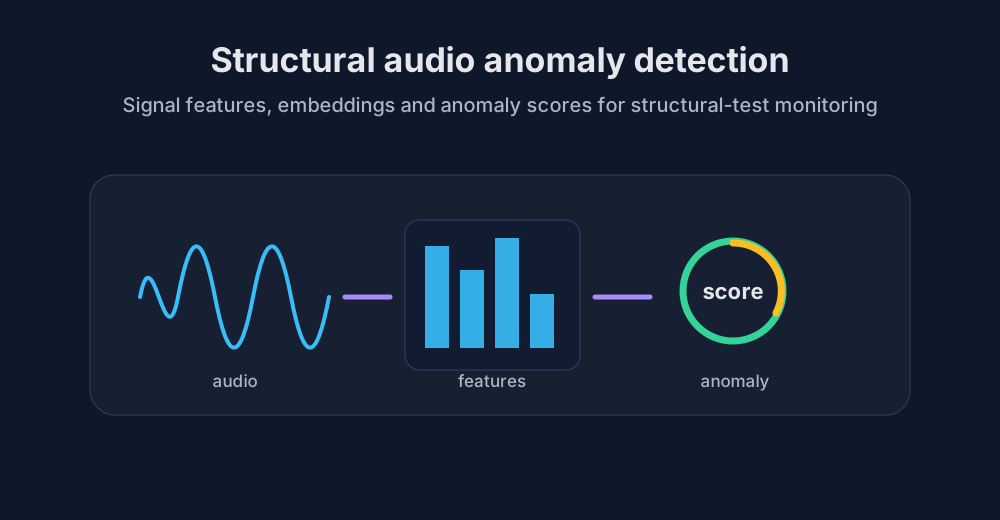
Audio and vibration-like measurements can contain useful information about structural testing, but raw signals are difficult to interpret directly. The goal is to extract features and identify changes that may indicate abnormal behaviour.
Approach
- Transform audio data into time-frequency features.
- Use learned representations and similarity metrics to compare states.
- Compute anomaly scores and support classification or review workflows.
- Keep the reproduction path clear for reviewers and future users.
What it demonstrates
The repository shows applied ML for structural monitoring: public/reproducible data boundaries, documented methods, quick reproduction, and clear explanation of how anomaly indicators are produced.
git clone https://github.com/sergioald/audio-anomaly-detection-structural-testing.git
cd audio-anomaly-detection-structural-testing
python -m pip install -e .
# see the repository README for the quick reproduction path
cd audio-anomaly-detection-structural-testing
python -m pip install -e .
# see the repository README for the quick reproduction path